After seeing some pictures of Jordanian antiquities, I'm convinced hordes of people should be flocking to Jordan now. This is a dim view apparently.
According to reports from the Central Bank of Jordan, tourism numbers are down, yet tourism earnings are up. It's deceptively positive: the baseline for 2011 was so low, that any increase is being compared against essentially nothing. Jordan is now focusing on attracting high income visitors, which is completely in line with our last class discussion: “Jordan does not wish to be a volume-driven attraction like Egypt."
With the plans to construct the new boulevards and wealth attractions in Amman,it looks as if Jordan is following through. Yet I only wonder if modernity, technology, and money will get in the way of preservation and appreciation.
Tuesday, December 11, 2012

Spoke Too Soon

I vaguely remember a past Discovery special in which they found Nefertiti's mummy, but then again what do I know.
Discovery in the Valley of the Kings

To me, what is even more interesting, is the zero mentions for my good friend Dr. Zahi Hawass, who was apparently not involved at all in the project. The twilight of the dictator archaeologist? I haven't heard anything about him recently so possibly....
Also, apparently Merneptah was responsible for the first recorded use of the term "Israel" to describe the people he attached in the Levant.
History Channel Historians

His credentials are shoddy, and his debts are growing, yet David Elkington maintains his find to be legitimate, despite growing opposition from reputable authorities. Again, off topic, but since this journey has trodden on my childhood impressions of history, then why not.
Israel Continued...

It fits in well with the previous article detailing preservation efforts in the country, as if answering my ponderings about how Israel manages the protection of their treasures through volatile times. It reminds of a novel I once read, "People of the Book," in which a Sarajevo museum desperately tries to preserve its Haggadah from war and looters.
My favorite quote: "If they survived 800 years before they got here, we have to do the utmost, for the good of humanity, so they will survive at least another 500 years."
Monday, December 10, 2012
Israeli Historic Preservation
At this point I'm really running off the rails of what this blog is dedicated to, yet I couldn't pass over this story about historic preservation efforts in Israel. Most of the efforts currently surround cataloging and preserving the British Mandate Antiquities Department, which is incredibly extensive. A digitization process will follow.
Preservation fascinates me, mostly because I became heavily involved with the subject when I was a member of my local historical commission. The amount of precision, work, and expense that is required to preserve historic documents is astounding. In Sandwich, MA, a huge chunk of our documents were stored in an old, decrepit bank vault underground, when they required a facility with heavy ventilation, boxes, and new shelving units. The digitization process is still ongoing, and only came after a huge cataloging effort across five or six repositories throughout town. I'm greatly heartened that Israel is taking this on, even in the midst of recent tensions.
Preservation fascinates me, mostly because I became heavily involved with the subject when I was a member of my local historical commission. The amount of precision, work, and expense that is required to preserve historic documents is astounding. In Sandwich, MA, a huge chunk of our documents were stored in an old, decrepit bank vault underground, when they required a facility with heavy ventilation, boxes, and new shelving units. The digitization process is still ongoing, and only came after a huge cataloging effort across five or six repositories throughout town. I'm greatly heartened that Israel is taking this on, even in the midst of recent tensions.
State of Tourism: "It's Bad"
Things aren't looking good for Egypt: the article quotes Antiquities Minister Muhammed Ibrahim as lamenting the loss of tourists to the daily protests and social actions. Numbers of visitors to the Pyramids and the Temple at Abu Simbel are far below their usual count at this point in the year, and under fifty people visited the city of Alexandria this past week.
It's confirmation that now really is the time to go to Egypt. Almost makes me want to bail on Christmas and just hop on a flight.....
It's confirmation that now really is the time to go to Egypt. Almost makes me want to bail on Christmas and just hop on a flight.....
Antiquities Abroad

When I first saw the headline, I assumed a recovered artifact was returning to Egypt. My thinking progressed to wondering how the Egyptian government in its current state could handle antiquities recovery. Of course I was wrong, and it's another case of artifacts from one country being displayed in another. This isn't a commentary on the merits of that practice; I'm fine with the Rosetta Store and the Elgin Marbles being displayed in Britain. However it's more a story of my reactions to headlines, and a little over-hoping about the state of antiquities in Egypt.
This article was also from Fox News. I always feel they are more fair and balanced when it's not political.
Pyramid Threat Continued
This is more or less another follow up to my previous post regarding the Islamist extremist designs against the pagan symbolism of the Pyramids of Giza. An article in Al-Arabiya reports that the Egyptian government is taking these threats seriously, specifically the words of Sheikh al-Gohary. Moreover, worries persist that Salafi groups will exert influence over new guidelines surrounding Egyptian antiquities.
This would be disastrous. Heritage tourism is the major underpinning of the Egyptian economy, and the destruction of such an important source of revenue would be unacceptable fanaticism. As I recognize my Western perspective, I continue to be amazed at how practical thinking is ignored, and it seems analogous to Tea Party Republicans like Todd Akin making stupid comments about rape.
This would be disastrous. Heritage tourism is the major underpinning of the Egyptian economy, and the destruction of such an important source of revenue would be unacceptable fanaticism. As I recognize my Western perspective, I continue to be amazed at how practical thinking is ignored, and it seems analogous to Tea Party Republicans like Todd Akin making stupid comments about rape.
Archaeological Wonders in Yemen
 |
| Yemeni City of Shibam |
I also included a picture of Shibam, which we discussed in class. It turned me onto what wonders there are in Yemen, which is usually discussed in the context of growing terrorist activities and recent uprisings. Yemen has an incredibly valuable resource in these ancient establishments, and the Yemeni government could do well to secure them, and increase marketing and travel to them. The images of Shibam are probably some of the most magnificent architectural undertakings I have seen, and I cannot imagine how or why the Yemeni government would not capitalize on them.
Wednesday, October 24, 2012
Pyramids are Open Again
- Thank god the Pyramids weren't demolished. It was a longshot of course, but it's still reassuring to know.
- Muhammed Ibrahim doesn't have that Zahi Hawass camera presence.
UNESCO Fears Loss of Syrian Cultural Heritage
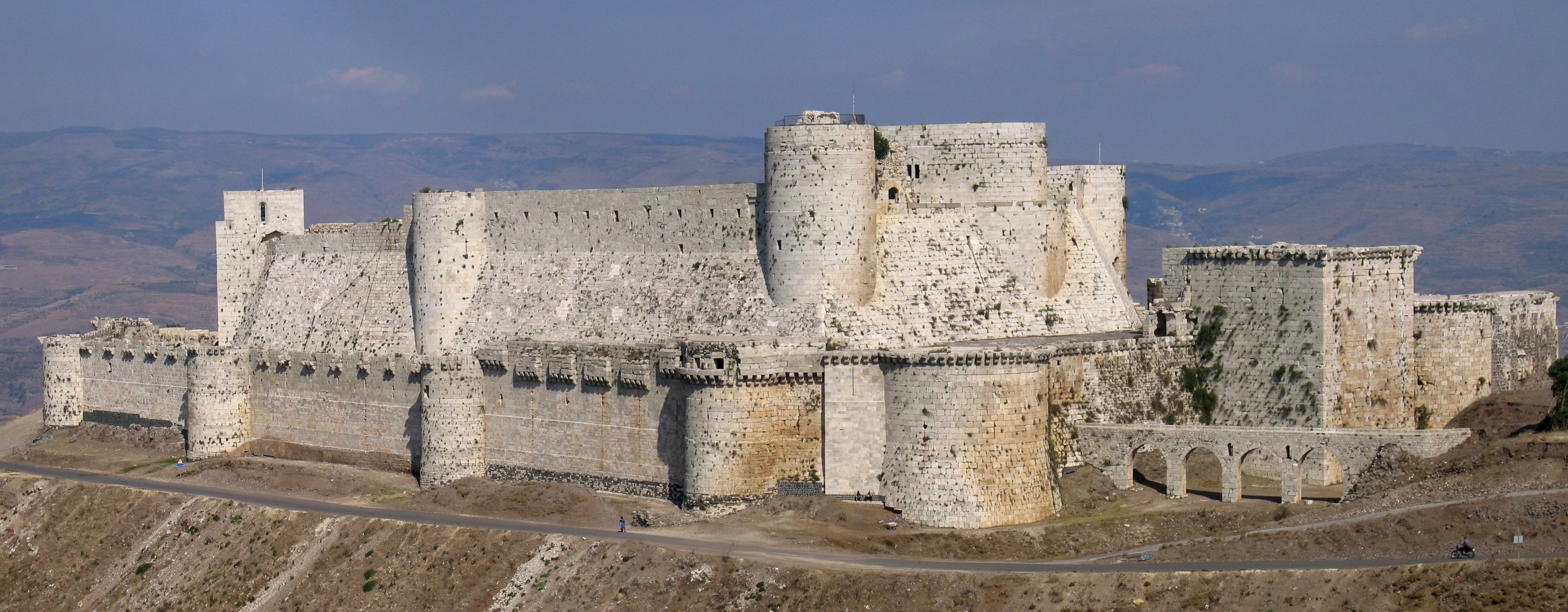
Well this video is slightly clearer, although it's not entirely clear if it actually is the Syrian army that is shelling the castle town of Krak des Chevaliers. It was the first time I had heard of the castle, so I strolled over to Wikipedia: it's fascinating.
The structure is massive, and it has been around since the First Crusade! I watched the video again after and I winced at the damage that has been done. Back in March, the Director-General of UNESCO called for protection of Syria's cultural heritage, listing the castle as a protected site. To me, it is encouraging to see concern for the antiquities of a country that is not Egypt, though the damage is continuing to be done.
Alleged Looting by Syrian Army
However I have no clue what a Syrian soldier looks like, versus an FSA soldier. I'm inclined to believe that the Syrian army would loot museums, yet I'm not sure if that's a western oriented opinion based on the values we attribute to the Assad regime. I mean, what reason would they have to loot anyway? The point is it is distressing to see looting of precious history anywhere, and increases the worry of the Arab Spring causing irreparable damage to the region's ancient heritage.
A subnote: this video's comments are the reason I hate the Internet.
The Mubarak of Antiquities
I really should have just done a blog about Zahi Hawass. Despite my efforts to research antiquity situations outside Egypt, I keep finding more perspectives about Hawass. In an earlier post I wondered about whether Hawass was still in charge of Antiquities, then I found out he was no longer, however the in between was still unknown to me.
This article challenged my views of Hawass, just as many others have. I grew up admiring him, inspired to pursue a career in history, Egypt or otherwise. However, it is apparent that many young Egyptians reviled the man, with his political connections to Mubarak and his strict control of antiquities. I never put him in a political context, much less a corrupt one. The article also points out how his strict management has benefited Egypt, both culturally and economically. It quotes Egyptologists as worried about whether the Ministry of Antiquities will be downgraded, risking Egypt's treasures. As much as I want to find news about the goings on outside Egypt, this is just too intrinsic to my coming of age in history to ignore.
This article challenged my views of Hawass, just as many others have. I grew up admiring him, inspired to pursue a career in history, Egypt or otherwise. However, it is apparent that many young Egyptians reviled the man, with his political connections to Mubarak and his strict control of antiquities. I never put him in a political context, much less a corrupt one. The article also points out how his strict management has benefited Egypt, both culturally and economically. It quotes Egyptologists as worried about whether the Ministry of Antiquities will be downgraded, risking Egypt's treasures. As much as I want to find news about the goings on outside Egypt, this is just too intrinsic to my coming of age in history to ignore.
Tuesday, October 23, 2012
Archaeology since January 2012
I've been seriously trying to expand out of Egypt, so I thought a broad survey of archaeology since the revolutions began might yield information outside the typical historical center. According to Archaeology magazine, Libya has seen looting of centuries old artifacts. Reports of damage to the Roman sites of Leptis Magna proved false, however thousands of artifacts have apparently been smuggled out through Egypt.
The more I read about how antiquities are being handled in the aftermath of revolutions, I think it is indicative of the strength of the government. Take Egypt, where antiquity management seems to be returning to normal, while Libya is still having difficulties. I know there are more important reasons for governments to become stable, like national security, legitimacy, protection of rights, healthy television industry, etc., but I would hope protecting artifacts which could be valuable to the economy or national pride should be secured.
The more I read about how antiquities are being handled in the aftermath of revolutions, I think it is indicative of the strength of the government. Take Egypt, where antiquity management seems to be returning to normal, while Libya is still having difficulties. I know there are more important reasons for governments to become stable, like national security, legitimacy, protection of rights, healthy television industry, etc., but I would hope protecting artifacts which could be valuable to the economy or national pride should be secured.
Arab Spring in Mali?
So far all of my reading about antiquities in the Arab Spring has only yielded information about Egypt, which I suppose makes sense. In my search to expand into other parts of the Middle East, I found an interesting article about Mali, in which the Huffington Post states that the Arab Spring has spread in the north:
But everything changed in January, when the northern part of Mali was destabilized as a result of the Arab Spring. Historically, the Tuareg nationalist movement has tried to establish its own country beyond the current national borders in the Sahel region. They are Muslims, but their political identity is based on a broader cultural independence vision. However, it is a newer Tuareg rebel movement, with radicalized views on religion, that is named as responsible for precipitating the present situation.
I was surprised to hear that the Arab Spring uprisings were spreading outside northern Africa, however it seems to be taking a different tack, with fundamentalist Muslims seizing control and discussing imposing hijabs and other social restrictions. More distressing to me is the destruction being carried out on 13th century mosques, libraries and artifacts. It seems akin to the calls to level the Pyramids in Egypt, but is actually occurring. Maybe I haven't been paying attention to the news enough, but I don't believe this particular uprising has been reported on, probably because of the fundamentalist aspect. It's a shame, since this wanton destruction of ancient history is going on unabated.
But everything changed in January, when the northern part of Mali was destabilized as a result of the Arab Spring. Historically, the Tuareg nationalist movement has tried to establish its own country beyond the current national borders in the Sahel region. They are Muslims, but their political identity is based on a broader cultural independence vision. However, it is a newer Tuareg rebel movement, with radicalized views on religion, that is named as responsible for precipitating the present situation.
I was surprised to hear that the Arab Spring uprisings were spreading outside northern Africa, however it seems to be taking a different tack, with fundamentalist Muslims seizing control and discussing imposing hijabs and other social restrictions. More distressing to me is the destruction being carried out on 13th century mosques, libraries and artifacts. It seems akin to the calls to level the Pyramids in Egypt, but is actually occurring. Maybe I haven't been paying attention to the news enough, but I don't believe this particular uprising has been reported on, probably because of the fundamentalist aspect. It's a shame, since this wanton destruction of ancient history is going on unabated.
Egyptians Bearing Gifts
It's not very surprising that Egypt's autocratic rulers have used the country's ancient treasures as diplomatic tools. It is actually rather hypocritical for a nation's leadership to demand the return of artifacts captured by imperial powers while the leaders give away statues and museum pieces to foreign dignitaries. I was surprised, however, to read that while Nasser and Sadat sent gifts away with diplomats and politicians, there is no evidence that Hosni Mubarak followed suit.
Since I've been on a Zahi Hawass kick in my past posts I wonder if this discrepancy has to do with Hawass' de facto management of Egyptian antiquities. Hawass was dedicated to retrieving Egypt's most symbolic relics from abroad, most notably the bust of Nefertiti in Germany. Since Hawass has recently be tried because of his close personal connections to Mubarak, perhaps he was able to exert some restraint over the former president. I am hopeful that this process does not continue under the new government.
Since I've been on a Zahi Hawass kick in my past posts I wonder if this discrepancy has to do with Hawass' de facto management of Egyptian antiquities. Hawass was dedicated to retrieving Egypt's most symbolic relics from abroad, most notably the bust of Nefertiti in Germany. Since Hawass has recently be tried because of his close personal connections to Mubarak, perhaps he was able to exert some restraint over the former president. I am hopeful that this process does not continue under the new government.
Saturday, October 20, 2012
Dr. Hawass in the Aftermath
After writing the last entry, I became curious about what has happened to Dr. Zahi Hawass since February 2011. Well, a cursory glance at Wikipedia told me that Hawass was replaced by Mohammed Said, and that Hawass faced minor corruption charges over his awarding of museum gift shop contracts.
Even more concerning are reports that looting is continuing, with items disappearing from the Egyptian Museum in Cairo. This is highly worrying to me, not just from a historical perspective, but from an economic one as well. Hawass understood the power of tourism as an industry, and his international profile and tough management (seeking return of Egyptian artifacts from abroad, etc.) brought in money and business. From first impressions, his successor does not seem to be inspiring confidence, nor does he seem to be concerned about security and its resulting implications (i.e. whether a nation like Germany would be willing to cede as important an artifact as the bust of Nefertiti).
The Huffington Post article notes governmental support for new museums among other proposals. I hope these gain speed in time to save Egypt's ancient history.
Even more concerning are reports that looting is continuing, with items disappearing from the Egyptian Museum in Cairo. This is highly worrying to me, not just from a historical perspective, but from an economic one as well. Hawass understood the power of tourism as an industry, and his international profile and tough management (seeking return of Egyptian artifacts from abroad, etc.) brought in money and business. From first impressions, his successor does not seem to be inspiring confidence, nor does he seem to be concerned about security and its resulting implications (i.e. whether a nation like Germany would be willing to cede as important an artifact as the bust of Nefertiti).
The Huffington Post article notes governmental support for new museums among other proposals. I hope these gain speed in time to save Egypt's ancient history.
Friday, October 19, 2012
Who's in Charge?

In an article from February 2011, Science Magazine documents growing protest against Hawass, who was recently made Minister for Antiquities by Hosni Mubarak, from museum workers seeking higher wages. Add that to a decade sized dose of criticism from international archaeologists accusing Hawass of dictatorial control of Egyptian antiquities, and my childhood idolization was a little shaken.
I'm a rather hopeful that Hawass comes out of the Revolution with his career intact. I would shudder to think what might happen to the museums in major cities if riots and looting continue. With such a solid reputation as manager of caretaker of Egypt's history, Hawass has the passion and personality to secure what might be his country's only surviving industry as unrest continues.
Tuesday, October 9, 2012
Calls to Destroy Egypt's Great Pyramids Begin
At first glance, I seriously thought this article was from The Onion. The Pyramids at Giza played a very large role in my childhood (probably just like everyone else), and helped establish my love for learning about and preserving history. According to the article, several leading clerics of the Salafi Party are calling for the demolition of the ancient landmarks as they represent a period of pre-Islamic paganism. The author suggests this is a historical phenomenon, with the Islamic conquerors of Egypt in the 7th Century burning "paganistic" manuscripts and documents from archives across the territory, with endorsement of the Caliph.
This is a severe example of the separation between Islamist radicals and the new governing party of Egypt. Since the Pyramids are so important to Egypt's tourism industry, and are symbols of the nation, I can understand (and hope) that the government will not take action on this front. However, if such monolithic structures as the Pyramids are not escaping even the rhetoric of the revolution, I can only imagine what is going on with the valuable and more accessible treasures of ancient Egypt which are spread throughout the country.
This is a severe example of the separation between Islamist radicals and the new governing party of Egypt. Since the Pyramids are so important to Egypt's tourism industry, and are symbols of the nation, I can understand (and hope) that the government will not take action on this front. However, if such monolithic structures as the Pyramids are not escaping even the rhetoric of the revolution, I can only imagine what is going on with the valuable and more accessible treasures of ancient Egypt which are spread throughout the country.
Subscribe to:
Comments (Atom)